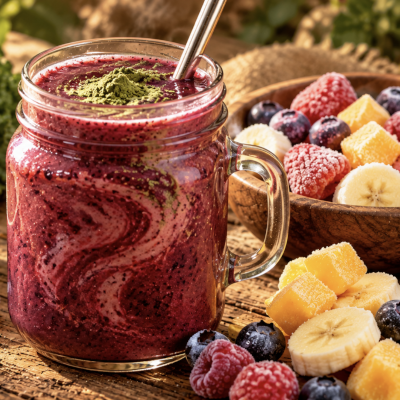
Kale powder is naturally rich in many vitamin and minerals crucial to human health. It’s practical applications are:
- Morning and post-workout smoothies with yogurt or fortified oat/soy milk
- Soups and broths
- Evening tea, spike of Magnesium
Bone-support
Vitamin K supports your bones! It is needed for proteins involved in normal blood clotting and bone metabolism, and adult adequate intakes are 120 mcg/day for men and 90 mcg/day for women. Kale also contributes minerals such as calcium, potassium, and magnesium, though the exact amount in a powder depends heavily on the fresh kale, drying ratio, and final moisture level.
Eye-health support from carotenoids
Kale is known for carotenoids such as lutein and zeaxanthin, pigments associated with leafy greens. These compounds accumulate in the eye’s macula and are often discussed for their role in supporting normal visual function and protecting tissues from oxidative stress.
For a powdered additive, this is especially relevant because carotenoids are fat-soluble. They are better used in the context of a meal or drink that contains a little fat. A kale-powder smoothie with yogurt, nut butter, avocado, chia, flax, or milk will generally be a better carrier for carotenoids than plain water.
Antioxidant and cellular-protection benefits
Kale contains antioxidant nutrients and phytochemicals, including vitamin C, carotenoids, phenolics, and glucosinolate-derived compounds. Vitamin C is an antioxidant that helps protect cells from free-radical damage, while cruciferous vegetables are known for glucosinolates that can break down into biologically active compounds such as isothiocyanates.
While powdered kale contains less levels of these beneficial components, it still contributes antioxidant value, but the amount depends on processing. Lower-heat drying such as SweetSoil processes, reduced oxygen exposure, opaque packaging, and cool storage are all important if the goal is a premium “high-phytonutrient” ingredient. Research on dried kale supports the idea that drying method and storage meaningfully affect retained vitamins and phytochemicals.